 Pat Utomi
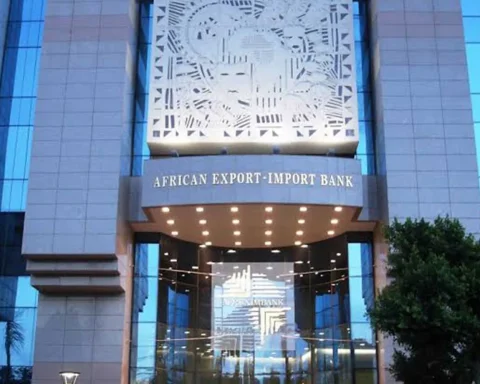
When global lead rating agency Fitch downgraded Africa’s frontline trade finance bank, Afreximbank, many stakeholders quickly registered their concerns about the consequences for financing trade, economic growth, poverty alleviation, and infrastructure development in Africa.
These alarms and concerns, raised by the Africa Peer Review Mechanism, several business leaders, and associations of finance institutions, point to the significant effect on the cost of financing development in Africa, where Afreximbank, as a development finance institution, has been pivotal in de-risking financial flows into the continent.
Join our WhatsApp ChannelHaving spent the last year as a Fellow and Global Policy Scholar at the Woodrow Wilson Centre in Washington, focusing on sovereign wealth funds and financing infrastructure that facilitate intra-African trade, I am even more agitated that such a downgrade may erode much of the work that has been done in recent years to overcome Africa’s development challenges.
The slow growth, growing poverty, and discontent on the continent have often been blamed on inadequate capital to invest in infrastructure and industrialization. This is why most of the development models, from the modernization paradigm to the neocon SAPs, have drawn from the capital injection into Europe of the Marshall Plan to suggest capital transfers as a peg for national growth.
The effect of development aid has, however, left Africa at less than 3% of international trade and with sluggish growth, prompting books like William Easterly’s Elusive Quest for Growth. Dambisa Moyo, the Zambian-born economist and former banker, even pushes the envelope further in her call for trade instead of aid in the book Dead Aid.
READ ALSO: Afreximbank Honours 4 Companies For Critical Role In Transforming African Economies
The need for alternative approaches in the pursuit of progress became imperative for Africa’s development agencies. It was relieving that greater effectiveness in stimulating growth seemed to be coming with the African Continental Free Trade Agreement (AfCFTA) and Afreximbank’s drive to grow manufacturing clusters and intra-African trade. Africa cannot afford to drop the ball on the gains from its development agencies.
The evidence suggests that more capital deserves to flow into sectors that grow trade, but capital does not know Africa and prices risk there in a way that constricts required capital flows. Fair rating of Afreximbank allows it to de-risk the flow of capital into risks it better understands and so can price more appropriately than the perception of risk by owners of capital from far away tends to do.
As French economist Thomas Piketty, author of Capital in the 21st Century, points out, the season is one of abundant capital unevenly deployed. Surely, institutions like Afreximbank deserve to be spared conduct that will increase its cost of capital so that it can better serve the greater common good across the continent. As such, it is important that the African Union prevents African countries from defaulting on Afreximbank facilities. Moreover, as these African countries have signed and ratified treaties where they have committed to protecting these institutions. Ghana, for example, would do well to review its strategy and save Afreximbank from the burden of its default. It does not augur well for African countries to sabotage their own institutions, which they created to address critical challenges on the continent.
Afreximbank itself also should take a tougher stand because more harm will be done to its ability to help more countries if it does not get tough on recalcitrant countries. Ghana and Zambia must respect their treaty obligations to the Bank and other participating states and continue to treat Afreximbank lending as coming from a preferred creditor rather than unilaterally opting to move the facility to commercial bank grade, with negative repercussions for the bank’s balance sheet.
Ragnar Nurkse, the development economist at Columbia University in the 1950s, was noted to say that capital is made at home. Afreximbank’s strategy helps many countries strengthen domestic savings to enable investments, giving teeth to making capital at home by anchoring projects like the recently commissioned medical complex in Abuja. Savings from medical tourism contingent on such a project are an example of why countries in Africa should do the needful to give greater life to the balance sheet of the bank.
If Africans live by Ubuntu—“I am because we are”—a collaborative path can be found to protect the balance sheet of the bank from poor management of debt exposure in some countries.
Patrick Utomi is a Political Economist, Professor at the Lagos Business School and Chairman of PAFTRAC