 Emmanuel Ochayi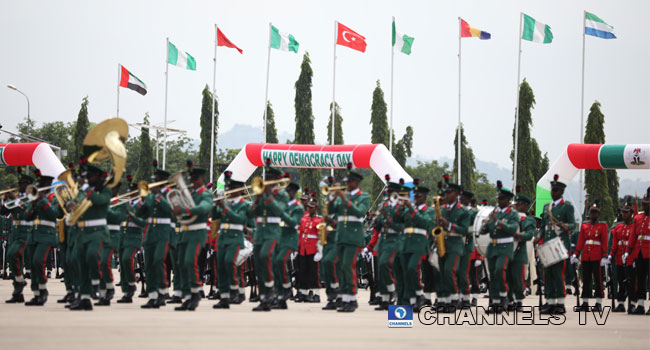
As Nigeria marks 25 years of uninterrupted democracy, since the 1999 transition from military rule, the nation reflects on an inspiring yet challenging journey.
The Nigerian democratic experience stands out in a continent where some countries have been plagued by military coups or extended dictatorships. However, the celebration is tempered by the reality that many Nigerians have yet to fully reap the benefits of democracy.
Join our WhatsApp ChannelWhile Nigeria has maintained a stable democratic framework, other African nations have struggled under the yoke of military rule and autocratic regimes. Recent years have seen a resurgence of military takeovers in countries like Burkina Faso, Chad, Guinea, Mali, Niger, and Sudan. These nations have experienced the suspension of constitutional order and the imposition of military authority, often justified as a response to crises or as a means to safeguard the nation.
In some cases, military interventions have been welcomed by citizens as a corrective measure against autocratic leaders who have overstayed their tenure or manipulated constitutional provisions to remain in power. For instance, the military overthrow of President Alpha Conde in Guinea was seen as a reaction to his abolition of presidential term limits.
Back in Nigeria, the democratic process has been fraught with challenges. Elections have been criticised for lacking transparency and fairness. The spectre of vote-buying, intimidation, and violence has often cast a shadow over the electoral process. Corruption remains a pervasive issue, with public funds being misappropriated and a lack of accountability at various levels of government. This has hindered effective governance and the delivery of public services, contributing to widespread disillusionment among the populace.
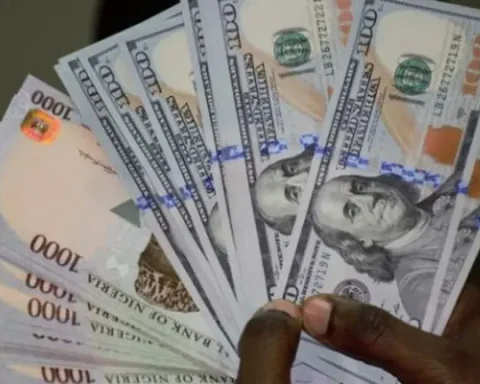
The economic situation has also been a source of frustration. Despite being Africa’s largest economy, Nigeria grapples with high unemployment rates, inflation, and poverty. According to the latest data from the National Bureau of Statistics (NBS), the country’s headline inflation rate continued its upward trajectory for the 16th consecutive month, hitting 33.69 per cent in April, while food inflation was 40.53 per cent. According to the 2023 State of Food Security and Nutrition World report, the number of Nigerians who are food insecure has increased by 133 per cent in three years, jumping from 63.8 million people between 2014 and 2016 to 148.7 million people between 2020 and 2022.
READ ALSO: Democracy Day: Nigeria Still In Search Of Credible Electoral System – Obi
The wealth generated from natural resources like oil has not translated into improved living standards for the majority of Nigerians. As Nigeria commemorates this democratic milestone, it is an opportunity for introspection and renewal. The nation must address the systemic issues that have hindered the full realisation of democratic dividends. Strengthening institutions, enhancing transparency, and fostering inclusive development are crucial steps toward a more prosperous and equitable Nigeria.
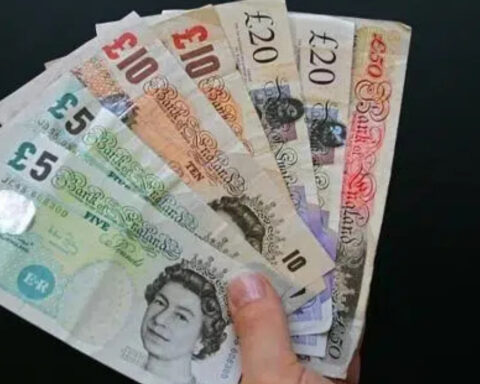
In 2019, the monthly minimum wage was increased from N19,000 (£10) to N30,000 (£16), but many say that amount is nowhere close to enough. Workers nationwide say their living expenses have rocketed as food inflation, already in double digits, continues to rise. Electricity tariffs have surged by at least a hundredfold in the last year. In some markets outside the big cities, yams are now also sold in huge slices, for those who cannot afford a whole tuber. The cost of making the staple dish jollof rice has tripled in the last three years. As a coping mechanism, analysts say young people are increasingly turning to sex work and cybercrime in small towns, especially in the south.
“To be sure, Nigeria’s democracy has, over the last 25 years, been hijacked by imposters who promote personal and private interests at the expense of the nation’s viability and its future,” Chidi Amuta, a public affairs analyst, said.
Olawale Okunniyi, Chairman of the Patriots, a visible actor in the June 12 struggle, said the critical issues central to the June 12 struggle have not been fully achieved. “Though the country achieved the reversal to civil rule and civilian administration in 1999, we are yet to achieve democracy and real popular democratic government as civil rule was hurriedly decreed into existence by the military under the leadership of Abdulsalami Abubakar, without a democratic people’s constitution which ought to be the foundation and basis for every democracy and democratic governance,” he said.
Mumakhai Unagha, a former presidential aspirant and June 12 activist, said the issues of the June 12 struggle have not been fully addressed. He, however, said he was glad that June 12 has been formally and officially recognized as a public holiday. In his words: “Some of us who risked our lives in the struggle are happier as our efforts are not completely in vain even though the expectation of Nigerians is not met yet.”
Martin Onovo, a former presidential candidate, said the country was not presently under real democratic rule but was being ruled by “a dictator” in civilian garb. He said it was wrong to call the current system democracy when elections that brought into power the current crop of leaders were questionable. He said: “We don’t have democracy in Nigeria now, we are just deceiving ourselves. Is this what Abiola and the rest fought for?”
As Nigeria marks this significant milestone, the question remains: Is Nigerian democracy a celebration of progress or a charade masking deeper systemic issues? The answer lies in the nation’s willingness to confront its challenges and strive for a truly democratic and prosperous future.

Emmanuel Ochayi is a journalist. He is a graduate of the University of Lagos, School of first choice and the nations pride. Emmanuel is keen on exploring writing angles in different areas, including Business, climate change, politics, Education, and others.
- Emmanuel Ochayihttps://www.primebusiness.africa/author/ochayi/
- Emmanuel Ochayihttps://www.primebusiness.africa/author/ochayi/
- Emmanuel Ochayihttps://www.primebusiness.africa/author/ochayi/
- Emmanuel Ochayihttps://www.primebusiness.africa/author/ochayi/