 Victor Ezeja
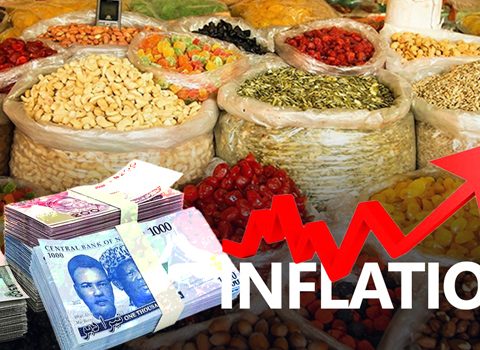
The National Bureau of Statistics (NBS) on Monday disclosed that Nigeria’s annual inflation rate rose to 26.72 per cent in September from 25.80 per cent in the previous month, even as the headline inflation rate rose year-on-year (YoY) by 26.72 per cent last month.
While food inflation rate increased year-on-year to 30.64 per cent from 29.34 percent in August, the NBS attributed this rise to increases in prices of oil and fat, bread and cereals, potatoes, yam and other tubers, fish, fruit, meat, vegetables and milk, cheese, and eggs. Prime Business Africa reports that this is despite that President Bola Tinubu had in July declared an immediate State of Emergency on food insecurity to tackle the increase in food prices.
Join our WhatsApp ChannelAlso at the time, the President directed that “all matters pertaining to food & water availability and affordability, as essential livelihood items, be included within the purview of the National Security Council.”
READ ALSO: Nigeria’s Inflation Rate Now 22.79%, Oil, Fish Drive Food Inflation Up
The NBS Consumer Price Index (CPI) report for September 2023 however listed the contributions of items on the divisional level to the increase in the headline index year on year as: food & non-alcoholic beverages (13.84 per cent), housing water, electricity, gas & other fuel (4.47 per cent), clothing & footwear (2.04 per cent), and transport (1.74 per cent).
Others are: furnishings & household equipment & maintenance (1.34 per cent), education (1.05 per cent), health (0.80 per cent), miscellaneous goods & services (0.44 per cent), restaurant & hotels (0.32 per cent), alcoholic beverage, tobacco & kola (0.29 per cent), recreation & culture (0.18 per cent) and communication (0.18 per cent).
Meanwhile, on a month-on-month basis, the Food inflation rate in September 2023 was 2.45 per cent, this was 1.41 per cent lower compared to the rate recorded in August 2023 which was 3.87 per cent. This decline is said to have been caused by a fall in the rate of increase in the average prices of potatoes, yam and other tubers, bread and cereals, fruits, and fish.
“The average annual rate of Food inflation for the twelve months ending September 2023 over the previous twelve-month average was 25.65 per cent, which was a 6.29 per cent points increase from the average annual rate of change recorded in September 2022 (19.36 per cent),” the report said.
On a year-on-year basis, the statistics agency put the headline inflation rate at 5.94 per cent points higher as against the rate recorded in September 2022, which was 20.77 per cent.
According to the NBS, “In September 2023, the headline inflation rate increased to 26.72 percent relative to the August 2023 headline inflation rate which was 25.8 percent.
“Looking at the movement, the September 2023 headline inflation rate showed an increase of 0.92 percentage points when compared to the August 2023 headline inflation rate.
“On a YoY basis, the headline inflation rate was 5.94 percent points higher compared to the rate recorded in September 2022, which was 20.77 percent.
“This shows that the headline inflation rate (YoY basis) increased in September 2023 when compared to the same month in the preceding year (i.e., September 2022).
“Furthermore, on a month-on-month basis, the headline inflation rate in September 2023 was 2.1 percent which was 1.08 percent lower than the rate recorded in August 2023 (3.18 percent). “This means that in September 2023, the rate of increase in the average price level was less than the rate of increase in the average price level in August 2023.”
On inflation distribution across the country, the report reveals, “In September 2023, all items inflation rate on a year-on-year basis was highest in Kogi (32.95 percent), Rivers (30.63 percent), Lagos (30.04 percent), while Borno (21.05 percent), Jigawa (22.39 percent) and Benue (23.22 percent) recorded the slowest rise in headline inflation on a year-on-year basis.
“In September 2023, Food inflation on a year-on-year basis was highest in Kogi (39.37percent) Rivers (35.95 percent), and Lagos (35.66 percent), while Jigawa (23.41 percent), Borno (25.29 percent) and Sokoto (25.38 percent) recorded the slowest rise in Food inflation on a YoY basis.”