 Amanze Chinonye
The Independent National Electoral Commission (INEC) has placed the projected cost of conducting Nigeria’s 2027 general elections at ₦873.78 billion, a figure significantly higher than the funding released for the 2023 polls.
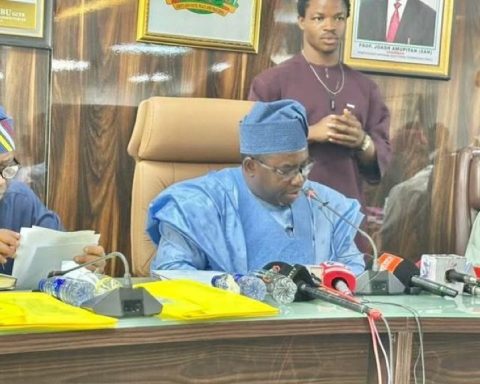
The figure was presented on Thursday by INEC Chairman, Prof. Joash Amupitan, during an appearance before the Joint Committee of the Senate and House of Representatives on Electoral Matters at the National Assembly.
The proposed allocation represents more than double the ₦313.4 billion released by the Federal Government for the 2023 elections, out of the ₦355.3 billion approved at the time.
Join our WhatsApp ChannelAccording to the commission, the early submission of the estimate is in compliance with the Electoral Act 2022, which requires election funding to be secured at least one year before a general election to allow for proper planning and procurement.
Cost Structure
INEC’s proposal outlines five major spending areas:
- ₦379.75 billion for election operations, including logistics, ad hoc staff engagement and nationwide deployment.
- ₦92.32 billion for administrative expenses.
- ₦209.21 billion dedicated to election technology.
- ₦154.91 billion for capital projects and long-term assets.
- ₦42.61 billion for miscellaneous expenditures.
Operational costs account for the largest portion of the budget, reflecting the scale of managing voting activities across the federation.
However, a notable feature of the proposal is the ₦209.21 billion technology allocation, signaling the commission’s continued investment in digital systems designed to strengthen voter accreditation, results processing and overall transparency.
READ ALSO : Budget Office Faults ‘Misreading’ of ₦246bn NEDC Budget Figures
Falana Slams Tinubu’s INEC Plan, Alleged Presidential Power Play
Separate 2026 Funding Gap
Beyond the 2027 elections, INEC is also seeking ₦171 billion to fund its 2026 operations. The request covers routine administrative functions and electoral activities such as bye-elections and off-cycle governorship polls.
The 2026 estimate includes:
- ₦109 billion for personnel costs,
- ₦18.7 billion for overheads,
- ₦42.63 billion for election-related activities, and
- ₦1.4 billion for capital expenditure.
However, the Ministry of Finance reportedly issued a budget ceiling of ₦140 billion, leaving a shortfall that the commission described as insufficient to meet its statutory obligations.
Prof. Amupitan emphasised that delayed or partial releases could disrupt preparations and compromise operational efficiency, stressing that predictable and adequate funding is critical to delivering credible elections.
Rising Financial Demands
The projected increase in election expenditure comes amid mounting economic pressures, including inflation, expanded voter registration exercises, technological upgrades and the logistical demands of coordinating nationwide polls.
With preparations already underway, lawmakers are expected to review the proposals as part of deliberations on the federal budgets for the 2026 and 2027 fiscal years.

Amanze Chinonye is a Staff Correspondent at Prime Business Africa, a rising star in the literary world, weaving captivating stories that transport readers to the vibrant landscapes of Nigeria and the rest of Africa. With a unique voice that blends with the newspaper's tradition and style, Chinonye's writing is a masterful exploration of the human condition, delving into themes of identity, culture, and social justice. Through her words, Chinonye paints vivid portraits of everyday African life, from the bustling markets of Nigeria's Lagos to the quiet villages of South Africa's countryside . With a keen eye for detail and a deep understanding of the complexities of Nigerian society, Chinonye's writing is both a testament to the country's rich cultural heritage and a powerful call to action for a brighter future. As a writer, Chinonye is a true storyteller, using her dexterity to educate, inspire, and uplift readers around the world.